Separation anxiety training · Edinburgh
Separation Anxiety Dog Training in Edinburgh
If your dog cannot cope with being left alone, everything else in your life has to work around it. Calm, one-to-one help in Edinburgh and the Lothians from Scott Blair — Crufts-winning trainer with a background in IGP and personal protection work.
The problem nobody sees
A behaviour that happens when you are not there
Separation anxiety is unusual among training problems because you are, by definition, never there for it. Most owners find out sideways — a note from a neighbour, a chewed door frame, a puddle in a hallway from a dog who has not had an accident in two years. By then the pattern has usually been running for a while.
It also reshapes your life quietly. You come home at lunchtime. You turn down the evening out. You stop asking whether the dog can be left, because you already know the answer. That is exhausting, and it is a great deal more common than most people realise — it is simply not a problem anyone discusses at the park.
The important thing is this: a dog panicking when left alone is not being spiteful, stubborn or badly behaved. They are frightened. That distinction matters, because it changes what actually works.
What it looks like
Signs your dog is struggling alone
Howling & Barking When Alone
Vocalising that starts soon after you leave and does not settle — often the first thing a neighbour mentions rather than something you see yourself.
Destruction at Exits
Chewing and scratching focused on doors, frames and windows rather than spread around the house — damage aimed at getting back to you.
Toileting in the House
Accidents from a fully house-trained dog that only ever happen when they are left alone, and never when someone is home.
Shadowing & Pre-Departure Panic
Following you room to room, then winding up as soon as you pick up keys or put shoes on — distress that starts before you have gone anywhere.
Pacing, Drooling & Refusing Food
A dog too worried to settle or eat while alone — the quiet version, and the one most often missed until it is filmed.
Escape Attempts & Self-Injury
Scrabbling at doors, crates or windows hard enough to damage paws, nails or teeth — the point at which the problem is a welfare one.
Where we start
Find out what actually happens
The first job is almost always to watch. A phone propped on a shelf recording the first half hour after you leave tells us more than an hour of conversation can, because it answers the question everything else depends on: is your dog frightened, or is your dog bored?
The two look similar in the aftermath and need very different plans. A bored dog gets to work in a fairly relaxed way and spreads the damage around. A panicking dog goes at the door you left by, within minutes, and does not settle afterwards. We also want to see when the distress begins — for a lot of dogs it has already started while you are still putting your shoes on.
One thing worth ruling out first: if this has come on suddenly in a dog who used to be fine, or there are changes in toileting, appetite, sleep or movement alongside it, see your vet before starting training. Pain and a number of medical conditions show up as new anxiety, and training cannot fix a problem that is physical.
Scott's approach
Build the tolerance rather than override the panic
Separation work runs on a simple principle that is hard to hold to in practice: your dog only learns that being alone is survivable if they are never pushed past the point of coping. Every absence that ends in panic teaches the opposite lesson and costs you ground you have already paid for.
So we work out where your dog's current limit genuinely is — which for some dogs is a closed door for ten seconds, not a trip to the shops — and we build from there in steps small enough that they keep succeeding. Alongside that we work on the pieces that make the whole thing easier: a dog who can properly settle rather than just lie down and wait, less shadowing around the house, and departure routines that stop predicting something frightening.
It is slower than obedience work and there is no honest way around that. It is also one of the changes that tends to stay changed, because you have altered how your dog feels about the situation rather than trained them to endure it quietly.
Working with real life
A plan that fits your week
The textbook version of separation training assumes you can stop leaving your dog while you work on it. Almost nobody can. People have jobs, school runs and appointments, and a plan that ignores that is a plan you will abandon in a fortnight.
So we build around what your week actually looks like — what cover you can realistically arrange, which absences are unavoidable, and how to protect the training from the ones that are. Sessions are one-to-one and take place in your own home, because home is the only place this behaviour exists. We travel to you across Edinburgh and the Lothians.
Why credentials matter
Reading the dog in front of you
Anxiety work depends almost entirely on accurate reading — spotting the point where a dog stops coping, which is usually well before the barking starts. Scott's background includes Best Puppy in Breed at Crufts 2020, 1st Post Graduate Dog & Reserve CC at Crufts 2022, and years of IGP and personal protection training, where reading subtle changes in a dog's state is the whole job.
That is what you are getting: someone who can tell you where your dog's actual threshold is, rather than guessing and finding out from the damage.
Further reading
Guides from the blog
There are related guides on the blog covering helping an anxious dog through Edinburgh festival season and building a reliable recall.
Our dogs
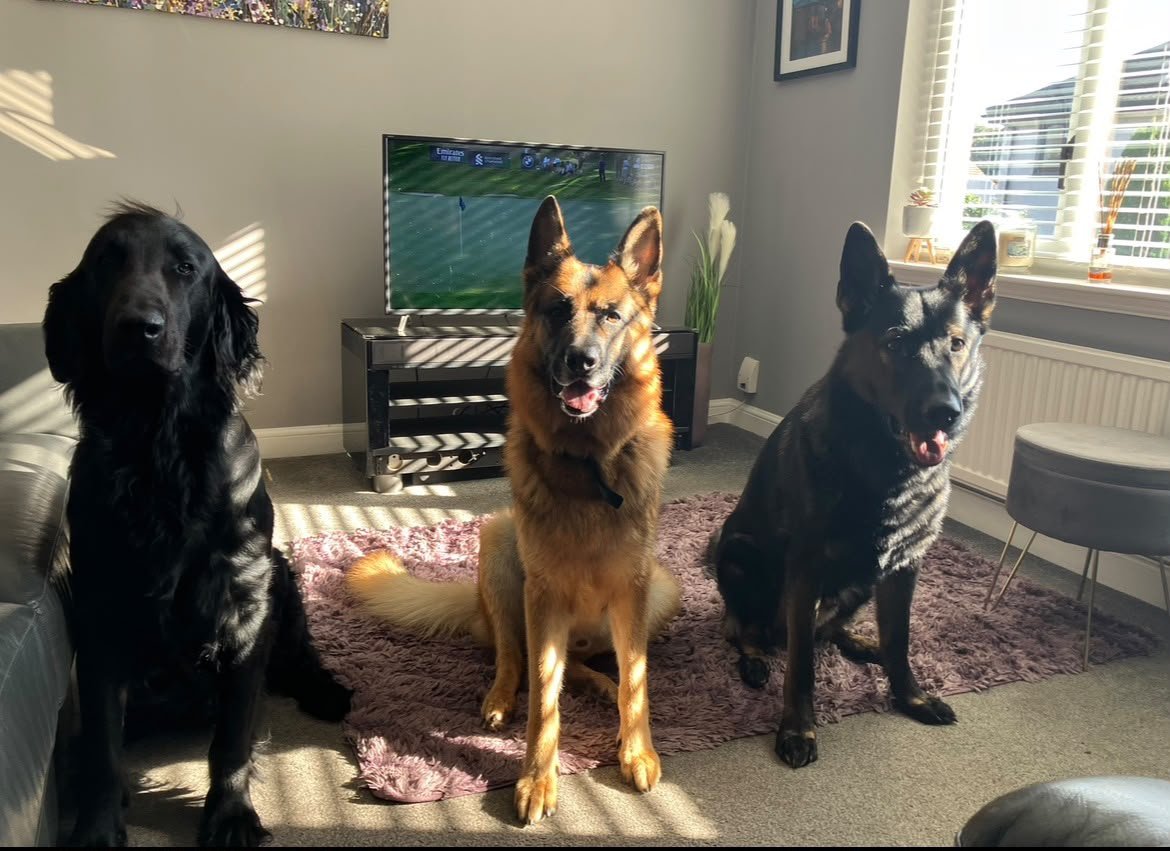
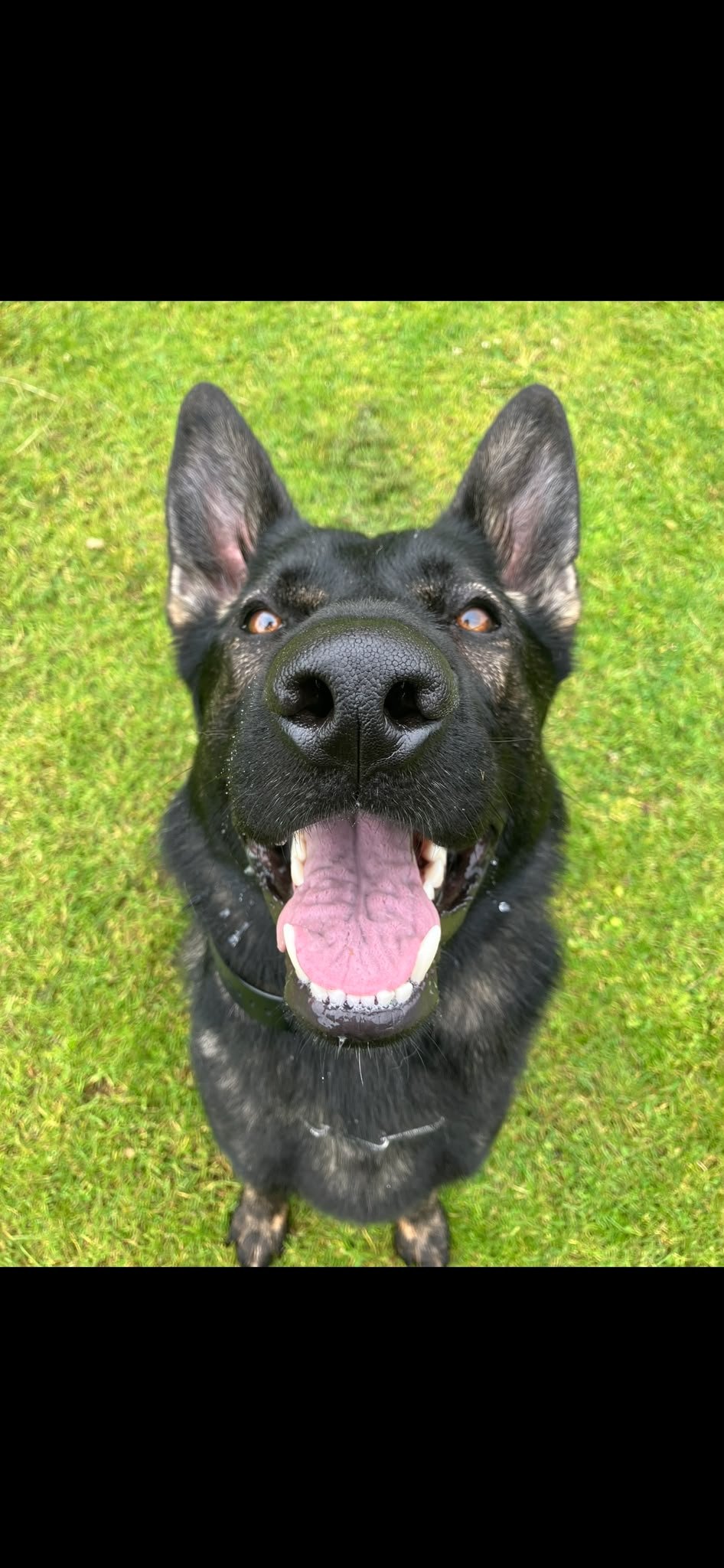
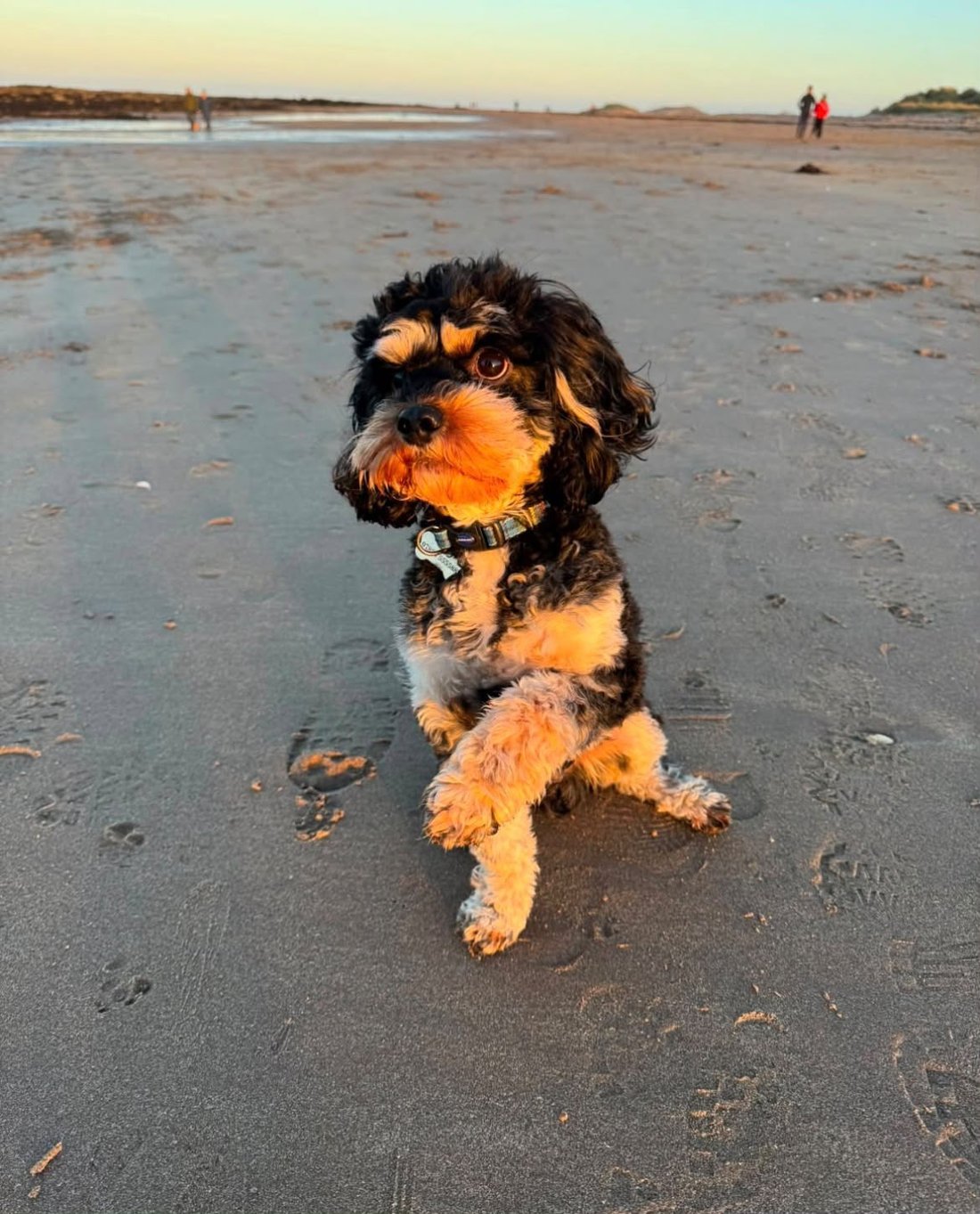
Meet some of the dogs
Common questions
Separation anxiety training FAQs
How do I know it's separation anxiety and not boredom?+
Boredom builds slowly and tends to be destructive in a fairly relaxed, exploratory way. Separation distress usually starts within the first several minutes of you leaving and looks panicked rather than busy — pacing, howling, scrabbling at the door you left by, drooling. Recording your dog for the first half hour alone is the quickest way to tell the difference, and it is the first thing we usually ask for.
Can separation anxiety actually be fixed?+
In most cases it improves a great deal, and many dogs get to the point where being left alone is genuinely unremarkable to them. It is slower work than most training because progress depends on your dog staying under threshold rather than on repetition — but it is very much trainable, and the change tends to hold once it is there.
How long does it take?+
Longer than obedience work, and it varies enormously with the dog and how long the pattern has been established. We would rather give you an honest picture at the consultation, once we have seen your dog and what they actually do when you leave, than quote a number that sounds reassuring and turns out to be wrong.
Do I have to stop leaving my dog while we train?+
Ideally you limit the absences your dog cannot yet cope with, because every panicked hour undoes work. In practice most families cannot stop entirely, so a large part of the plan is realistic: what cover you can arrange, what your dog can currently manage, and how to build from there without wrecking progress.
Should I see a vet as well?+
If the distress has appeared suddenly in a dog who was previously fine, or there is any change in toileting, appetite, sleep or mobility alongside it, get your vet to look first. Pain and several medical conditions can present as new anxiety, and no amount of training will resolve a problem that is physical.
What areas do you cover?+
Edinburgh and the wider Lothians, including East Lothian, Midlothian and West Lothian. Separation work is done in your own home, because that is the only place the behaviour actually happens.
Ready to get started?
Get in touch with Scott to talk through your dog and how we can help. Based in Edinburgh, serving the Lothians and beyond.
Related services
Explore more of our training
Dog Obedience Training in Edinburgh
Lead walking, recall, settling and everyday manners — tailored 1-2-1 training for dogs of any age.
Learn more →Puppy Training in Edinburgh
Build good habits from the very first weeks — socialisation, toilet training, recall and calm lead walking.
Learn more →Reactive & Aggressive Dog Training
Calm, structured 1-2-1 help for lunging, barking, lead reactivity and aggression toward dogs or people.
Learn more →Family & Personal Protection Dogs
Stable, obedient protection dogs that are safe with your family — trained across Scotland.
Learn more →Family Protection Dogs in Scotland
Train your own dog for family protection, or let Scott help you find and match a suitable, temperament-tested protection dog — across Scotland.
Learn more →Dog Training in Livingston & West Lothian
One-to-one training across Livingston, Linlithgow and the wider West Lothian area.
Learn more →Dog Training in Musselburgh & East Lothian
One-to-one training across Musselburgh, Dalkeith, Haddington and the wider East Lothian area.
Learn more →Dog Training in Dalkeith & Midlothian
One-to-one training across Dalkeith, Bonnyrigg, Penicuik, Loanhead and the wider Midlothian area.
Learn more →Or head back to the Family First Canine homepage.
Get in touch
Let's get started
Ready to transform your dog and strengthen your bond? Reach out and we'll find the perfect programme for you and your family in Edinburgh or the wider Lothians.
Contact details
Ready to book?
Use the form to tell us about your dog, or click below to go straight to the booking page. Based in Edinburgh, Scotland.
Book a Session