Reactive & aggressive dog training · Edinburgh
Reactive & Aggressive Dog Training in Edinburgh
You are not alone. Reactivity and aggression are common — and, in the right hands, very trainable. Calm, one-to-one help in Edinburgh from Scott Blair: Crufts-winning trainer with a background in IGP and personal protection work.
You are not alone
Reactivity is common — and treatable
Living with a reactive or aggressive dog is exhausting. The dread before every walk, the apologies to other owners, the quiet worry that your dog is somehow 'broken'. None of it is your fault, and very little of it is your dog's fault either.
Reactivity is a coping response — usually to fear, frustration or a lack of clear structure. With the right, consistent approach it can almost always be significantly improved, and often transformed entirely.
What reactivity looks like
The behaviours we help with
Lunging & Barking on Lead
The classic 'my dog is fine off lead but a nightmare on it' — usually rooted in frustration or fear, and very trainable.
Dog-to-Dog Reactivity
Reactions to other dogs on walks, in the park or at the door — from vocal frustration through to genuine aggression.
Reactivity Toward People
Barking, lunging or nipping at strangers or visitors — often driven by fear or a desire to create distance.
Fearful & Anxious Dogs
Dogs who hide, freeze, snap when cornered, or struggle with the world — quietly reactive, and often overlooked.
Guarding & Snapping
Growling, snapping or biting over food, toys, space or people — treated with calm structure, not confrontation.
Powerful & 'Difficult' Breeds
From Malinois to Bull breeds — hands-on experience with the dogs other trainers turn away.
Scott's approach
Confidence, trust and structure — not punishment
Our approach starts by understanding why your dog is reacting. From there we build the missing pieces: engagement with you, clarity about what's expected, and calm neutral responses to the triggers that used to set them off.
It's not about shouting a dog into silence or masking a behaviour with a harsh correction — that rarely holds and often makes things worse. We work with the dog in front of us, patiently, in the real world, until the new response becomes their default.
Some of our most rewarding work has been with powerful, high-drive dogs — including a Belgian Malinois named Max — where a considered, hands-on approach made the difference between a dog the family struggled with and a dog they genuinely enjoy living with.
Thresholds
Why distance is the first thing we change
Every reactive dog has a threshold — a distance at which it can still see the trigger and think, and inside which it can no longer do either. Almost all the progress in this work happens just outside that line, and almost all the damage happens inside it. That is the uncomfortable part for owners: a walk where your dog lunged and barked at four dogs has not been a difficult walk that you got through, it has been four more rehearsals of exactly the behaviour you are trying to change.
So the first change we usually make has nothing to do with obedience. It is about managing where you walk, when you walk and how much room you give things, so that your dog gets repeated experience of noticing another dog and staying calm. Once that is happening reliably, the distance comes down in stages. It feels slow for the first fortnight and then it stops feeling slow, because the dog is finally learning something instead of practising the problem.
The lead
Why so many dogs are only reactive on-lead
A great many dogs we see are civil in a field and impossible on a pavement, and the lead is the difference. A loose dog that is uneasy can increase the distance, turn away, curve around or simply leave — all of which are normal, polite canine behaviour. A dog on a two-metre lead can do none of it. When the only options left are tolerate it or make it go away, a lot of dogs pick the second, and barking and lunging works: the other dog usually does go away, which is precisely why the behaviour repeats.
The handler is part of the picture too. Tension travelling down the lead, a held breath, a shortened grip as another dog appears — dogs read all of it, and it confirms that something is worth worrying about. A fair amount of what we teach is handling: how to create space early, how to keep the lead soft when you least want to, and how to change direction without it becoming a scene. Owners are often surprised how much of the change comes from that rather than from the dog.
Why credentials matter
Experience with the dogs other trainers turn away
When you are dealing with a reactive or powerful dog, the person on the other end of the lead matters. Scott's background includes Best Puppy in Breed at Crufts 2020, 1st Post Graduate Dog & Reserve CC at Crufts 2022, and years of IGP and personal protection training — dogs that must be sharp, controllable and absolutely safe at all times.
That depth of experience means your dog is being read accurately, handled fairly, and given a clear route forward.
Areas covered
Edinburgh and the Lothians
One-to-one sessions across Edinburgh and the wider Lothians. We travel to you so the training happens where the problems actually occur — your street, your park, your home.
Further reading
Guides from the blog
There are related guides on the blog covering stopping a dog barking and lunging at other dogs, helping an anxious dog through Edinburgh festival season and lead walking without pulling.
Our dogs
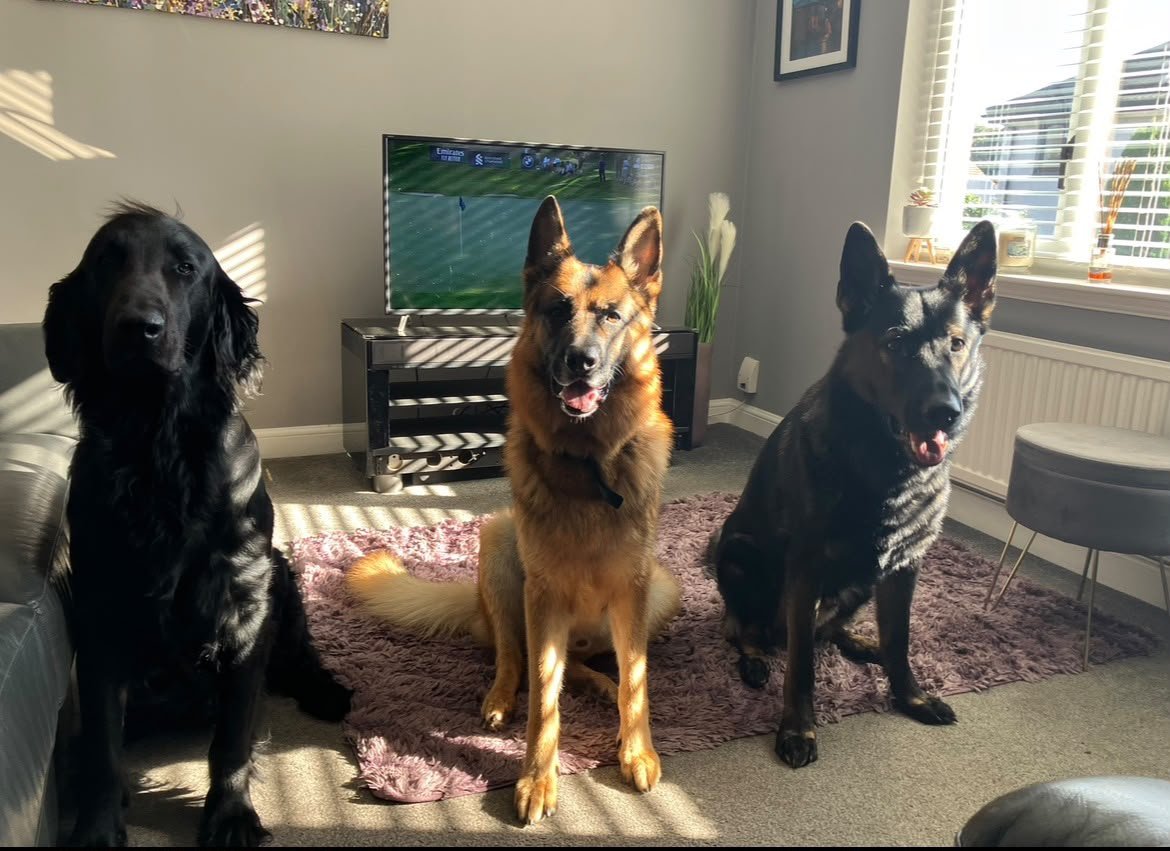
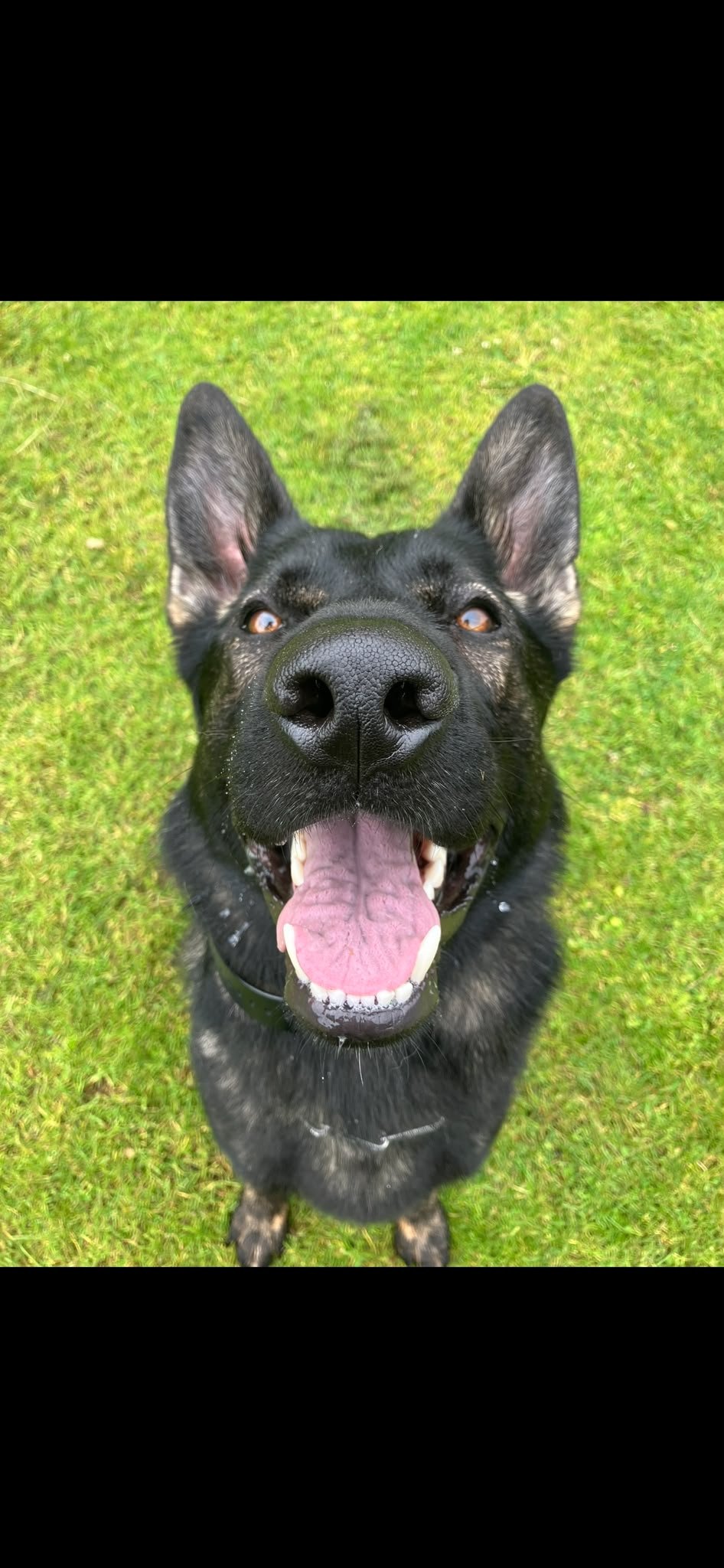
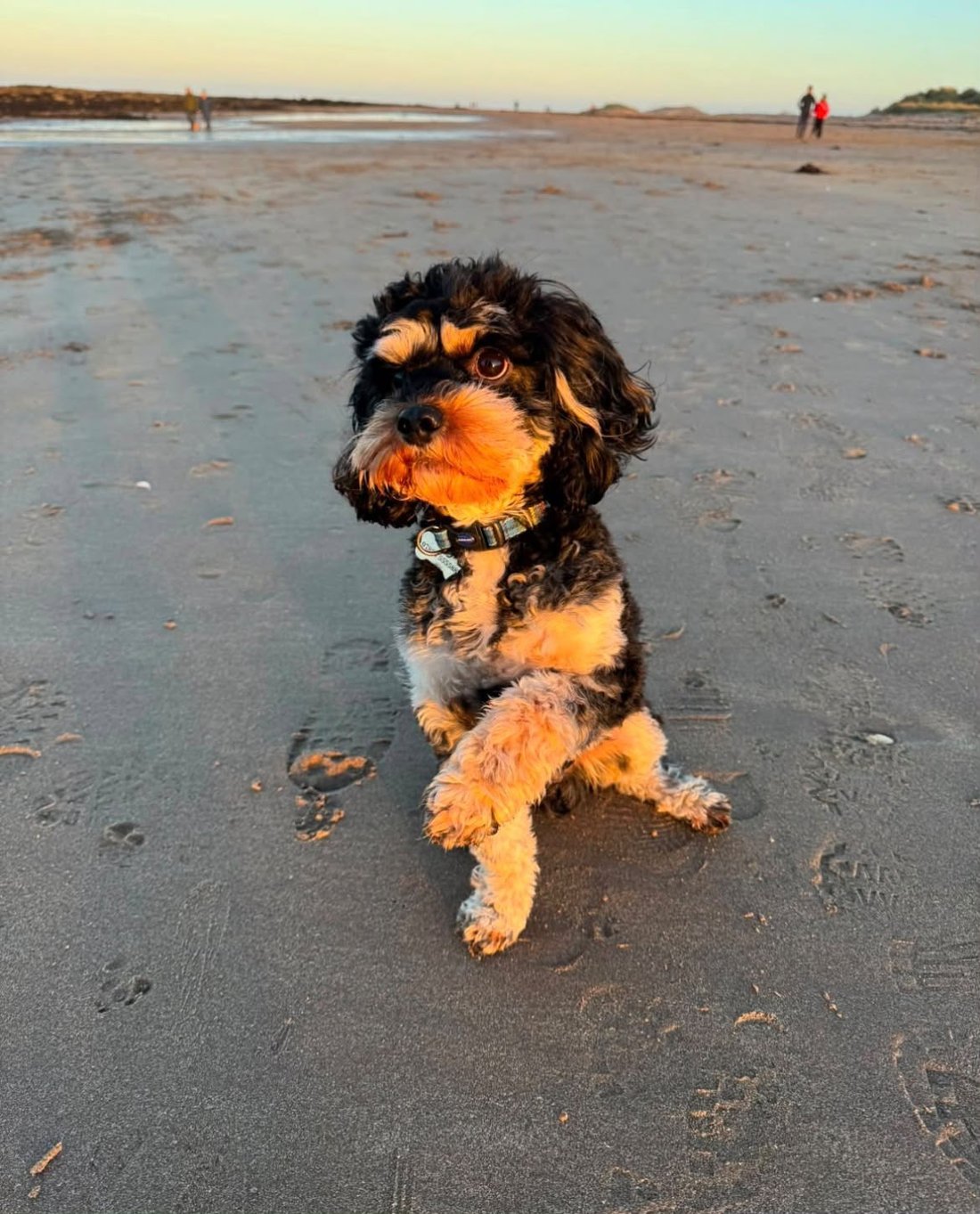
Meet some of the dogs
Common questions
Reactive dog training FAQs
Can an aggressive dog be trained?+
In the vast majority of cases, yes. Most reactive and aggressive behaviour can be significantly improved with the right, consistent approach — even in dogs that owners have been told are 'beyond help'.
How do you work with reactive dogs?+
Through tailored one-to-one sessions that build confidence, focus and calm responses. We work on the underlying emotion rather than just suppressing the behaviour, so the change is genuine and lasting.
Is the training one-to-one?+
Yes. Reactivity is highly individual, so every programme is one-to-one and shaped around your dog, your family and the situations you find hardest.
What areas do you cover?+
Edinburgh and the wider Lothians, including East Lothian, Midlothian and West Lothian. Sessions take place in your home and in the real-world environments where the problems actually show up.
How long does it take to improve a reactive dog?+
It depends on how long the behaviour has been rehearsed, how intense it is, and how consistent the household can be between sessions. Most owners see meaningful change within the first few weeks, and the honest picture is a gradual improvement with occasional setbacks rather than a single moment where the dog is fixed. We will give you a realistic view of your own dog rather than a promise.
Should I avoid other dogs completely while we train?+
Not completely, but you should stop letting the dog rehearse the reaction. Every lunge and bark that happens makes the pattern stronger, so the early work is about managing distance so your dog notices other dogs without going over threshold. That is not avoidance — it is giving the dog a chance to practise something different.
My dog is only reactive on the lead — why?+
Lead reactivity is extremely common and usually has two causes working together: the lead removes the dog's ability to create distance or move away, and the tension travelling down it tells the dog you are worried too. Many dogs that scream at the end of a lead are perfectly civil off it. We work on the handling as much as the dog.
Is it too late if my dog is an adult or a rescue?+
No. Adult and rescue dogs change all the time — it usually takes more consistency than it would with a young dog, because an established habit has to be replaced rather than prevented. Some of the most satisfying work we do is with dogs whose owners had been told they were beyond help.
Will you use a shock collar or harsh corrections?+
No. Suppressing the bark with something unpleasant may quieten a dog without changing how it feels, and a dog that has learned not to warn is a more dangerous dog, not a safer one. We work on the emotion driving the behaviour so the calm response is genuine.
Ready to get started?
Get in touch with Scott to talk through your dog and how we can help. Based in Edinburgh, serving the Lothians and beyond.
Related services
Explore more of our training
Dog Obedience Training in Edinburgh
Lead walking, recall, settling and everyday manners — tailored 1-2-1 training for dogs of any age.
Learn more →Puppy Training in Edinburgh
Build good habits from the very first weeks — socialisation, toilet training, recall and calm lead walking.
Learn more →Separation Anxiety Dog Training
One-to-one help for dogs who cannot cope with being left alone — howling, destruction at doors and pre-departure panic.
Learn more →Resource Guarding Dog Training
One-to-one help for dogs who growl or stiffen over food, toys, beds, the sofa or people — without punishing the warning.
Learn more →Family & Personal Protection Dogs
Stable, obedient protection dogs that are safe with your family — trained across Scotland.
Learn more →Dog Behaviourist in Edinburgh
One-to-one behaviour work for reactivity, aggression, anxiety, separation and resource guarding — the problems ordinary obedience training does not reach.
Learn more →Family Protection Dogs in Scotland
Train your own dog for family protection, or let Scott help you find and match a suitable, temperament-tested protection dog — across Scotland.
Learn more →Dog Training in Livingston & West Lothian
One-to-one training across Livingston, Linlithgow and the wider West Lothian area.
Learn more →Dog Training in Musselburgh & East Lothian
One-to-one training across Musselburgh, Dalkeith, Haddington and the wider East Lothian area.
Learn more →Dog Training in Dalkeith & Midlothian
One-to-one training across Dalkeith, Bonnyrigg, Penicuik, Loanhead and the wider Midlothian area.
Learn more →Dog Training in Leith, Edinburgh
One-to-one training across Leith, the Shore, Newhaven and the north of Edinburgh — built around flat living and busy streets.
Learn more →Dog Training in Portobello, Edinburgh
One-to-one training across Portobello, Joppa, Duddingston and the east of Edinburgh — from the beach and the promenade to flat living without a garden.
Learn more →Dog Training in Corstorphine, Edinburgh
One-to-one training across Corstorphine, Murrayfield, Clermiston and the west of Edinburgh — from busy St John's Road to the woods on Corstorphine Hill.
Learn more →Dog Training in Morningside, Edinburgh
One-to-one training across Morningside, Bruntsfield, Comiston and the south of Edinburgh: from recall in the Hermitage of Braid to settling calmly in a café.
Learn more →Dog Training in South Queensferry
One-to-one training across South Queensferry, Dalmeny and Kirkliston: from the narrow High Street and busy waterfront to recall on the Dalmeny shore path.
Learn more →Dog Training in Stockbridge, Edinburgh
One-to-one training across Stockbridge, Comely Bank, Inverleith and the New Town — built around flat living, busy pavements and the Water of Leith walkway.
Learn more →Dog Training in Newington & Marchmont, Edinburgh
One-to-one training across Newington, the Grange, Marchmont and the south-central city — from recall on The Meadows to settling in a tenement flat.
Learn more →Dog Training in Cramond & Barnton, Edinburgh
One-to-one training across Cramond, Barnton, Davidson's Mains and Silverknowes — from rock-solid recall on the foreshore to calm manners at home.
Learn more →Dog Training in Blackhall & Craigleith, Edinburgh
One-to-one training across Blackhall, Craigleith, Ravelston and the north-west of the city — from recall in the Corstorphine Hill woods to calm manners at home.
Learn more →Dog Training in Colinton & Juniper Green, Edinburgh
One-to-one training across Colinton, Juniper Green, Currie and Balerno — from recall in Colinton Dell to livestock-safe control on the Pentlands.
Learn more →Dog Training in Liberton & Gilmerton, Edinburgh
One-to-one training across Liberton, Gilmerton, Gracemount and Moredun — from calm lead walking on busy main roads to reliable recall in The Inch.
Learn more →Dog Training in Gorgie & Dalry, Edinburgh
One-to-one training across Gorgie, Dalry, Shandon and Slateford — built around tenement flat living, busy streets and the Union Canal towpath.
Learn more →Or head back to the Family First Canine homepage.
Get in touch
Let's get started
Ready to transform your dog and strengthen your bond? Reach out and we'll find the perfect programme for you and your family in Edinburgh or the wider Lothians.
5.0 — rated 5.0 from 16 Google reviewsContact details
Ready to book?
Use the form to tell us about your dog, or click below to go straight to the booking page. Based in Edinburgh, Scotland.