Resource guarding training · Edinburgh
Resource Guarding Dog Training in Edinburgh
If your dog growls over food, toys, the sofa or a stolen sock, it is frightening and it is far more common than anyone admits at the park. Calm, one-to-one help in Edinburgh and the Lothians from Scott Blair — Crufts-winning trainer with a background in IGP and personal protection work.
What is actually happening
A worried dog, not a dominant one
Resource guarding is a dog protecting something they believe is about to be taken away. Food and bowls are the obvious version, but dogs guard chews, toys, stolen items, beds, the sofa, doorways, the car and — often to their owner's embarrassment — people.
It is worth being clear about what it is not. It is not your dog trying to run the house, and it is not a challenge to your authority. It is anxiety about loss. That distinction is not academic: it is the whole reason the traditional advice makes guarding worse. A dog worried about things being taken does not become less worried when you take things away more often to prove a point.
It is also a normal behaviour in origin. Guarding food is sensible if you are a dog. The problem is not that the instinct exists — it is that it has become disproportionate and is now aimed at the people your dog lives with.
What it looks like
Signs your dog is guarding
Stiffening & Freezing Over Food
The quiet first stage most people miss — a dog who stops chewing, goes still and hard over the bowl as you pass, long before there is any noise.
Growling When Approached
A clear warning over a bowl, a chew or a stolen item. Unpleasant to hear, but it is your dog communicating rather than escalating — and worth protecting, not punishing.
Guarding the Sofa, Bed or Doorway
Space and resting places are guarded as often as food is. Growling when someone sits down or reaches past is the same behaviour wearing different clothes.
Running Off & Swallowing Fast
Grabbing something and bolting under a table, or gulping food far quicker when anyone is near — guarding by evasion rather than by threat.
Guarding People
A dog who stiffens, blocks or growls when someone approaches their favourite person on the sofa or in bed. Often mistaken for loyalty or protectiveness.
Snapping or Biting
The point at which warnings have stopped working or have been suppressed. Serious, and the stage at which management has to come before anything else.
The advice to ignore
Why taking things away backfires
The most common advice given to owners of guarding dogs is to take the bowl away mid-meal, put a hand in the food, or physically remove whatever is being guarded, in order to establish who is in charge. It is well-meant, it is widespread, and it makes the problem worse in a fairly predictable way.
Consider it from the dog's side. Their worry is that valuable things get taken. Every repetition proves them right. A dog who was mildly uneasy learns to be genuinely anxious, and the guarding tends to spread to more items rather than fewer.
The more serious consequence is what happens to the warning. Growling is a dog being polite — a clear signal that they are uncomfortable, given in advance. Punish the growl often enough and many dogs simply stop growling. The discomfort has not gone anywhere; you have only removed the part that told you about it. A dog who has learned that warnings get punished is the dog who bites "without warning", and that is a far harder and far more dangerous situation than the one you started with.
Scott's approach
Change the prediction, then build the skills
The work runs in a sensible order. Management comes first — not as the solution, but so that nobody gets bitten and your dog stops rehearsing the behaviour while we work. Practically that means feeding somewhere your dog will not be disturbed, picking up the high-value items that cause the worst of it, and agreeing household rules that everyone actually follows.
Then we change what your approach predicts. If a person coming near reliably means something good arrives rather than something disappearing, the underlying worry starts to come down — and the guarding goes with it, because the guarding was only ever a symptom of the worry. That is slower than it sounds written down, and it depends on working at a distance your dog can genuinely cope with rather than the distance you would like them to cope with.
Alongside that we build the practical skills that make daily life safe: a swap and a reliable "leave" that your dog is happy to perform rather than resents, a settle on a bed that is theirs and uncontested, and calm handling around food and possessions. We also work on your reading of the early signals — the stiffening and the freezing — so you can step in long before anything reaches a growl.
Families & children
When there are children in the house
A great deal of our guarding work is with families, and it needs saying plainly that children change the risk calculation. Children move unpredictably, reach for things, hug, and cannot be relied on to remember rules when they are excited. Most bites to children over food or a bed happen in exactly this way, and almost always after a series of warnings that were missed rather than absent.
So with a family we are firm about management while the training is underway: the dog eats separately behind a closed door or a gate, high-value chews are given only when the dog is alone, and nobody — adult or child — approaches the dog in their bed. Those rules are not permanent, but they are not optional either. Alongside them we teach children the part they can genuinely manage, which is mostly leaving the dog alone when the dog has something, and we work with the adults on reading the early signs.
Why credentials matter
Reading the dog before the growl
Guarding work depends almost entirely on accurate reading. The useful information is in the stillness, the hardening around the eye and the change in chewing rhythm — all of which happen well before any sound. Scott's background includes Best Puppy in Breed at Crufts 2020, 1st Post Graduate Dog & Reserve CC at Crufts 2022, and years of IGP and personal protection training, where reading subtle changes in a dog's state is the entire job.
That is what you are getting: someone who can tell you where your dog's actual threshold is and what the early signals look like on your dog, rather than finding out the hard way.
Further reading
Guides from the blog
There are related guides on the blog covering barking and lunging at other dogs and stopping puppy biting.
Our dogs
Meet some of the dogs
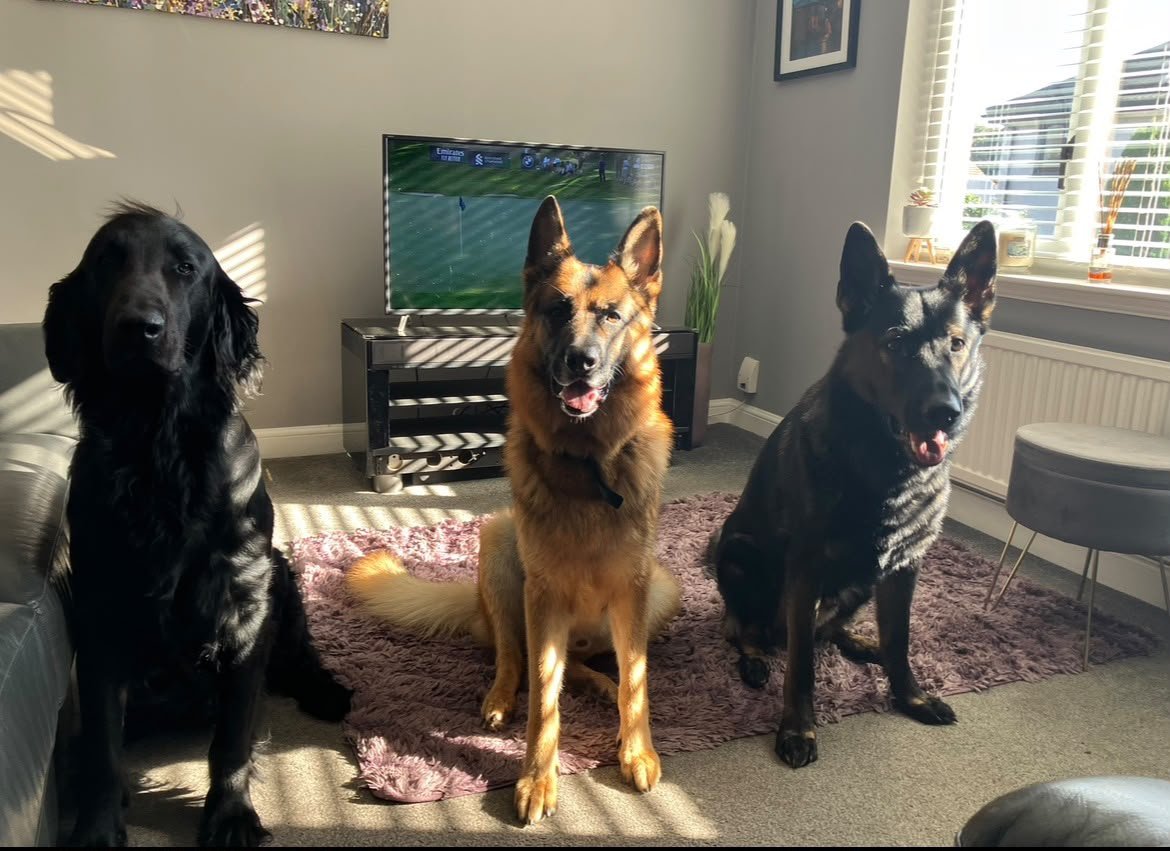
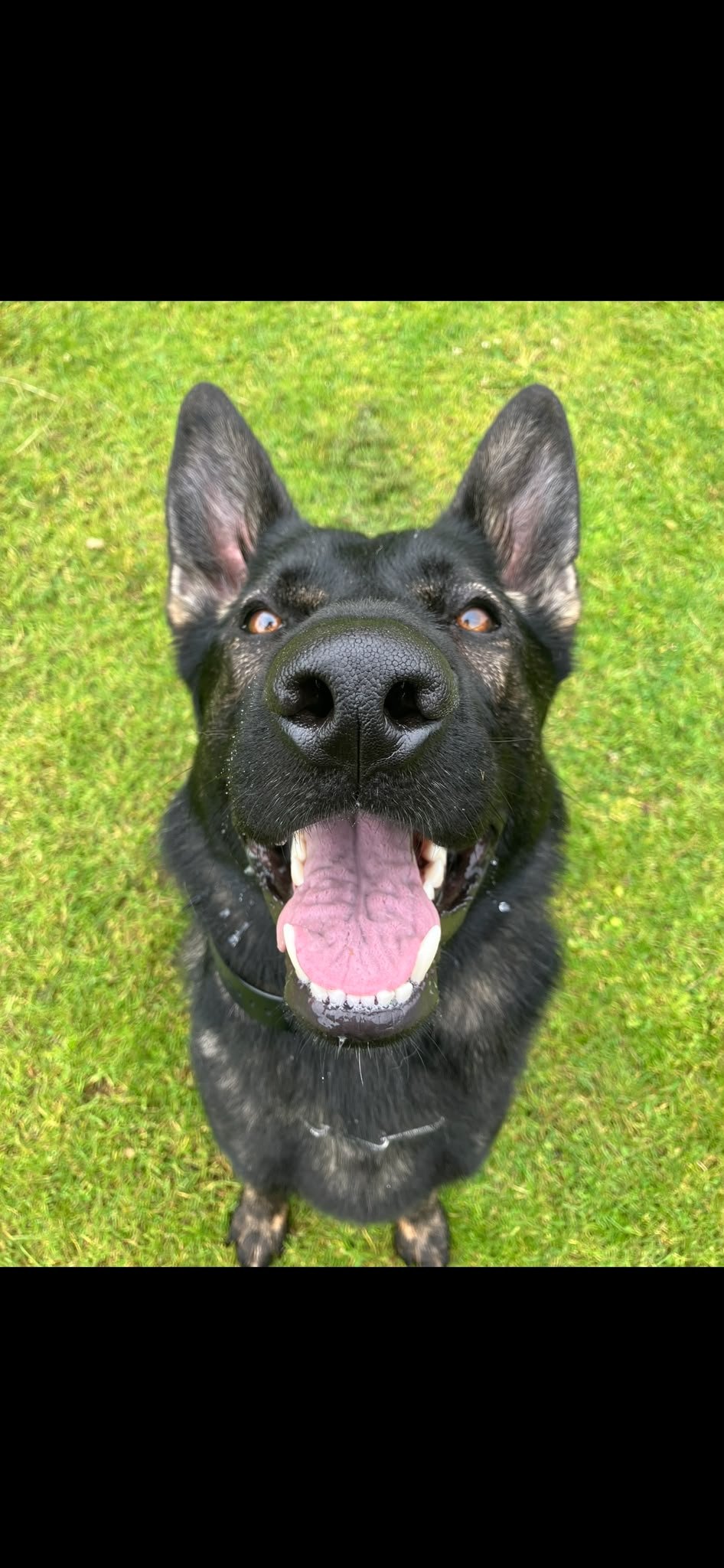
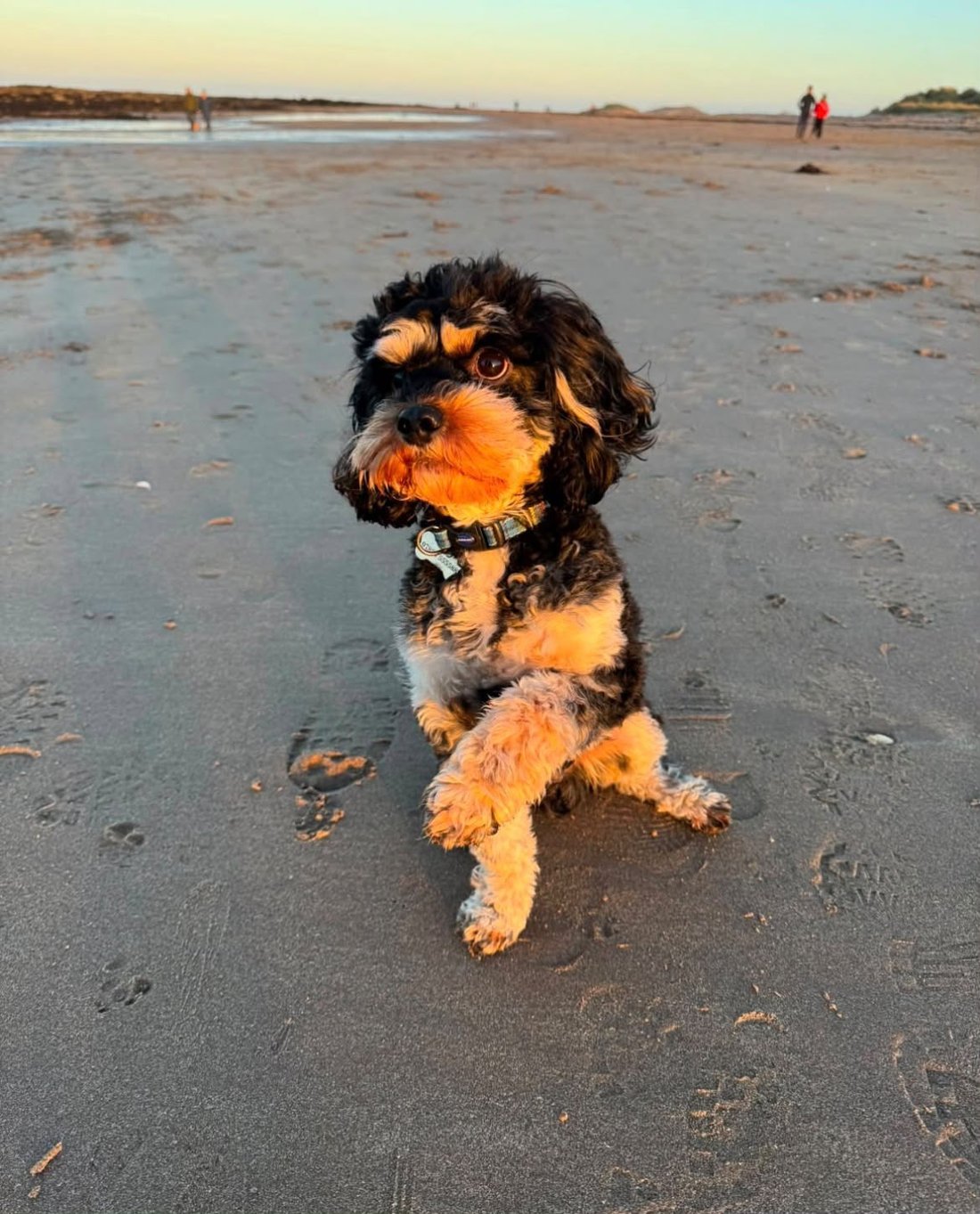
Common questions
Resource guarding training FAQs
Is resource guarding the same as aggression?+
It is a specific kind of aggression with a specific cause, and that matters because it changes the plan. A guarding dog is not generally hostile — they are worried about losing one particular thing. Most guarders are perfectly pleasant company right up until a bone, a stolen sock or the sofa comes into it. Treating it as general aggression tends to miss both the point and the fix.
Should I take things off my dog to show them I can?+
No. This is the most common piece of well-meant advice and it reliably makes guarding worse. If your dog's worry is that valuable things get taken away, proving repeatedly that valuable things get taken away confirms exactly what they were afraid of. It also teaches faster, quieter escalation — a dog who has learned that growling gets punished may simply stop growling and go straight to the next thing.
My dog growls at me over the sofa. Is that guarding?+
Usually yes — space and furniture are guarded as often as food is, and resting places are one of the most common triggers. Growling over a spot on the sofa, a bed or a doorway is the same underlying worry as growling over a bowl, and it responds to the same kind of work.
My dog has growled — do I need to worry?+
Take it seriously, but do not panic and please do not punish it. A growl is your dog telling you clearly that they are uncomfortable, which is useful information and far better than the alternative. The dogs that concern trainers most are the ones who have been told off for growling until they stopped warning first.
Can guarding be worked on if there are children in the house?+
Yes, and a great deal of our work is with families. Being straight about it: children raise the stakes, because they move unpredictably and cannot be relied on to follow rules. So management comes first and is non-negotiable — separation at mealtimes, no approaching the dog in their bed — while the training work happens alongside it. We will tell you honestly at the consultation what we think is realistic for your household.
How long does it take?+
It depends on how long the pattern has been running, what your dog guards and how far the behaviour has escalated. Mild guarding of a single item often improves quickly. A dog with several triggers and a bite history is longer, slower work. We would rather give you an honest picture once we have seen your dog than quote a number that sounds reassuring.
Should I see a vet first?+
If guarding is new in a dog who never did it before, yes. Pain makes dogs protective of resting places and reluctant to be approached or handled, and dental problems can change how a dog behaves around food. Rule out the physical before training the behavioural.
What areas do you cover?+
Edinburgh and the wider Lothians, including East Lothian, Midlothian and West Lothian. Guarding work is done in your own home, because that is where the triggers, the routines and the household actually are.
Ready to get started?
Get in touch with Scott to talk through your dog and how we can help. Based in Edinburgh, serving the Lothians and beyond.
Related services
Explore more of our training
Dog Obedience Training in Edinburgh
Lead walking, recall, settling and everyday manners — tailored 1-2-1 training for dogs of any age.
Learn more →Puppy Training in Edinburgh
Build good habits from the very first weeks — socialisation, toilet training, recall and calm lead walking.
Learn more →Reactive & Aggressive Dog Training
Calm, structured 1-2-1 help for lunging, barking, lead reactivity and aggression toward dogs or people.
Learn more →Separation Anxiety Dog Training
One-to-one help for dogs who cannot cope with being left alone — howling, destruction at doors and pre-departure panic.
Learn more →Family & Personal Protection Dogs
Stable, obedient protection dogs that are safe with your family — trained across Scotland.
Learn more →Family Protection Dogs in Scotland
Train your own dog for family protection, or let Scott help you find and match a suitable, temperament-tested protection dog — across Scotland.
Learn more →Dog Training in Livingston & West Lothian
One-to-one training across Livingston, Linlithgow and the wider West Lothian area.
Learn more →Dog Training in Musselburgh & East Lothian
One-to-one training across Musselburgh, Dalkeith, Haddington and the wider East Lothian area.
Learn more →Dog Training in Dalkeith & Midlothian
One-to-one training across Dalkeith, Bonnyrigg, Penicuik, Loanhead and the wider Midlothian area.
Learn more →Dog Training in Leith, Edinburgh
One-to-one training across Leith, the Shore, Newhaven and the north of Edinburgh — built around flat living and busy streets.
Learn more →Or head back to the Family First Canine homepage.
Get in touch
Let's get started
Ready to transform your dog and strengthen your bond? Reach out and we'll find the perfect programme for you and your family in Edinburgh or the wider Lothians.
Contact details
Ready to book?
Use the form to tell us about your dog, or click below to go straight to the booking page. Based in Edinburgh, Scotland.
Book a Session